Knowledge Hub

Best Books on Viral Growth

I've read hundreds of business books. Most are filler. These 12 actually changed how I think about growth, virality, and building products people share. No fluff picks — every book here earned its spot.

Honest ratings. Short reviews. Sorted by how useful they are for someone building viral loops today.

How I Rate

Relevance
How directly it applies to viral loop design
Actionability
Can you use it Monday morning?
Depth
Frameworks vs surface-level advice
Must-Read — The Foundation
The Cold Start Problem cover
MUST-READ ★★★★★

The Cold Start Problem

Andrew Chen · 2021

The single best book on network effects and viral growth written in the last decade. Andrew Chen (a16z, ex-Uber growth) breaks down how products go from zero to critical mass. The "atomic network" concept alone is worth the price — it explains why most viral loops fail at launch and what to do about it.

Network Effects Cold Start Marketplace SaaS Growth

Best for: Anyone designing a viral loop from scratch. Required reading.

View on Amazon →
Contagious: Why Things Catch On cover
MUST-READ ★★★★★

Contagious: Why Things Catch On

Jonah Berger · 2013

The science of why people share. Berger's STEPPS framework (Social Currency, Triggers, Emotion, Public, Practical Value, Stories) is the most useful mental model for designing shareable product moments I've ever encountered. Every viral loop starts with understanding why someone would tell another person — this book answers that.

Word of Mouth Psychology Sharing Triggers

Best for: Understanding the psychology behind sharing. The "why" behind every viral loop.

View on Amazon →
Hooked: How to Build Habit-Forming Products cover
MUST-READ ★★★★★

Hooked: How to Build Habit-Forming Products

Nir Eyal · 2014

Viral loops don't work without retention. Eyal's Hook Model (Trigger → Action → Variable Reward → Investment) explains why users come back — and users who come back are users who share. The "investment" phase is particularly relevant: it's where users create the content and connections that become the fuel for viral distribution.

Habit Formation Retention Product Design

Best for: Building the retention layer that makes viral loops sustainable.

View on Amazon →
Highly Recommended — Deep Dives
Viral Loop cover
DEEP DIVE ★★★★½

Viral Loop: From Facebook to Twitter, How Today's Smartest Businesses Grow Themselves

Adam Penenberg · 2009

The OG viral loop book. Penenberg traces viral mechanics from Tupperware parties to Facebook. It's older now, but the historical examples — Hotmail's email signature, Netscape's free browser, PayPal's referral bonuses — are still the canonical case studies everyone references. Read it for the pattern recognition.

Viral Mechanics Case Studies History

Best for: Understanding the history and mechanics of viral growth. The book that named the concept.

View on Amazon →
Hacking Growth cover
DEEP DIVE ★★★★½

Hacking Growth

Sean Ellis & Morgan Brown · 2017

Sean Ellis coined "growth hacking" and was the first growth lead at Dropbox. This book is the operational playbook: how to set up growth teams, run experiments, and systematically find what works. The chapters on activation and referral are directly applicable to viral loop design. Less theory, more process.

Growth Process Experimentation Referral Activation

Best for: Setting up a systematic growth process. The "how to run experiments" manual.

View on Amazon →
Product-Led Growth cover
DEEP DIVE ★★★★½

Product-Led Growth: How to Build a Product That Sells Itself

Wes Bush · 2019

The bridge between product strategy and viral distribution. Bush makes the case that the product is the marketing channel — which is exactly what a viral loop is. The frameworks for freemium vs free trial, time-to-value optimization, and self-serve onboarding are all building blocks for effective viral mechanics.

PLG Freemium Self-Serve SaaS

Best for: SaaS founders choosing between sales-led and product-led models.

View on Amazon →
Blitzscaling cover
DEEP DIVE ★★★★

Blitzscaling

Reid Hoffman & Chris Yeh · 2018

Reid Hoffman (LinkedIn co-founder) on scaling fast in uncertain conditions. The most relevant parts for viral loops: why network effects create winner-take-all dynamics, how to identify which type of network effect your product has, and when to prioritize speed over efficiency. The chapter on LinkedIn's own growth loops is pure gold.

Scaling Network Effects LinkedIn

Best for: Understanding network effects at scale and why speed matters.

View on Amazon →
Worth Reading — Broader Context
Traction cover
BROADER ★★★★

Traction: How Any Startup Can Achieve Explosive Customer Growth

Gabriel Weinberg & Justin Mares · 2015

The "Bullseye Framework" for finding your best growth channel. Lists 19 traction channels including viral marketing, and gives you a process to test which one works for your specific product. Viral loops are one channel — this book helps you decide if they should be your primary channel.

Traction Channels Channel Strategy Startups

Best for: Deciding where viral loops fit in your overall growth strategy.

View on Amazon →
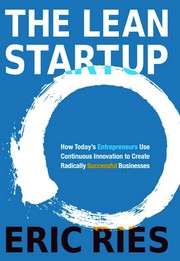
The Lean Startup cover
BROADER ★★★★

The Lean Startup

Eric Ries · 2011

You already know this one. What you might have missed: Ries' "engines of growth" framework directly maps to viral loops. The "viral engine" is one of three growth engines he identifies, and his approach to validated learning is exactly the mindset you need when testing viral mechanics — build, measure, learn, iterate.

Lean Methodology Engines of Growth Experimentation

Best for: The experimental mindset for testing viral mechanics quickly.

View on Amazon →
Crossing the Chasm cover
BROADER ★★★★

Crossing the Chasm

Geoffrey Moore · 1991 (revised 2014)

The classic on technology adoption. Why it matters for viral loops: your early adopters will share for different reasons than your mainstream users. The "chasm" between visionaries and pragmatists is where most viral loops break. Understanding which segment you're targeting changes everything about how you design the sharing trigger.

Technology Adoption Market Segments Go-to-Market

Best for: Understanding why viral loops work differently at different stages of adoption.

View on Amazon →
Made to Stick cover
BROADER ★★★★

Made to Stick

Chip Heath & Dan Heath · 2007

Why some ideas survive and others die. The SUCCESs framework (Simple, Unexpected, Concrete, Credible, Emotional, Stories) is a design tool for shareable messaging. If Contagious tells you why people share, Made to Stick tells you how to craft the thing they share so it actually lands.

Messaging Sticky Ideas Communication

Best for: Crafting the invite copy, sharing prompts, and value propositions inside your viral loop.

View on Amazon →
The Tipping Point cover
BROADER ★★★½

The Tipping Point

Malcolm Gladwell · 2000

The book that popularized the idea of social epidemics. Gladwell's Law of the Few (Connectors, Mavens, Salesmen) is useful for identifying which users to target first in your viral loop. It's pop science, not rigorous research — but the mental models for how ideas spread through social networks are still a good starting point.

Social Epidemics Influencers Tipping Points

Best for: Understanding how information spreads through networks. Read Contagious first — it's more rigorous.

View on Amazon →

My Recommended Reading Order

If you have time for 3: Contagious → The Cold Start Problem → Hooked

If you have time for 5: Add Hacking Growth and Product-Led Growth

If you want the full picture: Read all 12 in the order listed above — they build on each other.

Done reading? Start doing.

Books give you frameworks. Our tools give you execution. 79 AI prompts to turn viral growth theory into action — paste into ChatGPT and get results in minutes.

Browse Tools →

Keep Reading

What Is a Viral Loop? → Viral Loop Examples →